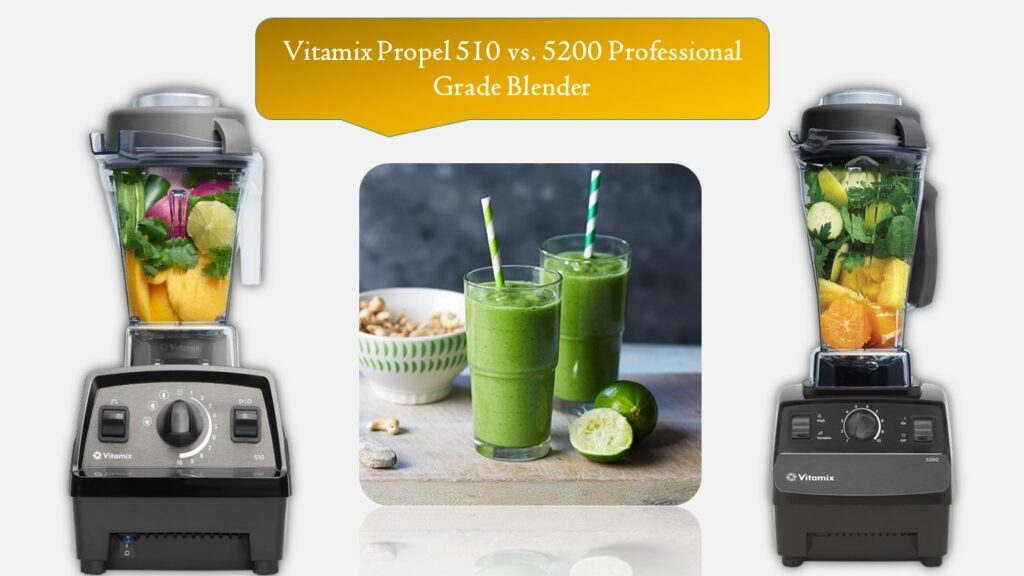
There is a distinct, roar-like hum that echoes through a kitchen when a Vitamix hits speed ten—it’s the sound of cellular structures being obliterated into silk. For the past month, my countertop has looked like a high-end juice bar as I’ve pitted the new-school Vitamix Propel 510 against the undisputed “OG” of the blending world, the Vitamix 5200.
If you’ve spent any time in professional kitchens, you’ve seen the 5200; it’s the tall, lean, manual workhorse that refuses to die. The Propel 510, however, is Vitamix’s attempt to bring that industrial power into the 2026 “smart home” era by adding automated programs to a more compact frame. After liquefying everything from kale stems to frozen strawberries and even steaming-hot butternut squash, I’ve found that while both carry the same 2 HP heart, they offer two very different ways of life. One expects you to be the pilot; the other offers an autopilot switch.
The Key Difference: Automation vs. Analog Control
The fundamental difference between the Vitamix Propel 510 and the Vitamix 5200 is the user interface and container geometry. The Propel 510 is designed for convenience, featuring three automated programs (Smoothies, Hot Soups, and Frozen Desserts) and a low-profile 48-ounce container that fits under most standard kitchen cabinets.
The Vitamix 5200 is a classic manual machine with a tall 64-ounce container and a dedicated High/Variable switch, favoring chefs who want total tactile control over their blends. While the 5200 offers a longer 7-year warranty compared to the Propel’s 5-year warranty, the Propel provides the modern luxury of “walking away” while the machine handles the timing.
Comparison Table: Vitamix Propel 510 vs. Vitamix 5200
| Feature | Vitamix Propel 510 | Vitamix 5200 Professional |
| Container Capacity | 48 Ounces (Low-Profile) | 64 Ounces (Tall Classic) |
| Preset Programs | 3 (Smoothies, Soups, Desserts) | None (Full Manual) |
| Control Interface | Dial + Pulse Switch | Dial + High/Variable Switch |
| Motor Power | 2 Peak HP | 2 Peak HP |
| Cabinet Clearance | 17.5″ Tall (Fits easily) | 20.5″ Tall (Often too tall) |
| Blade Material | Laser-Cut Stainless Steel | Laser-Cut Stainless Steel |
| Warranty | 5-Year Limited | 7-Year Limited |
| Self-Cleaning | Yes | Yes |
| View Current Price on Amazon | View on Amazon | View on Amazon |
Detailed Comparative Review: My Life at 30,000 RPM
To truly understand these machines, you have to use them for more than just a morning shake. I used them as my primary food processors, soup makers, and ice cream churners to see where they shine and where they frustrate.
Design: The Cabinet Struggle vs. The Large Batch King
The first thing I noticed when setting these up was the height difference. The Vitamix 5200 is a skyscraper. At 20.5 inches tall, it absolutely would not fit under my upper kitchen cabinets while sitting on the base. I had to store the container next to the motor, which is a small but constant annoyance. However, that tall, narrow container is legendary for a reason: it creates a massive, narrow vortex that pulls ingredients into the blades more effectively than almost any other design.
The Propel 510 is much more “suburban-kitchen friendly.” At 17.5 inches, it slides right under the cabinets. The 48-ounce container is the “Goldilocks” size—perfect for a couple or a small family. While the base of the 510 feels a bit more modern and sleek, the 5200 has that “built like a tank” industrial aesthetic that makes you feel like you’re holding a piece of culinary history.
Ease of Use: Autopilot vs. Hands-On Piloting
This is where the “personality” of the two blenders really diverges. With the Propel 510, I could throw in my frozen fruit, greens, and almond milk, turn the dial to the “Smoothie” icon, and walk away to start the coffee maker. The blender ramps up the speed, pulses at the right moments, and shuts itself off when the texture is perfect. For a busy morning, this is a massive win.
The Vitamix 5200 requires you to be present. You start on Variable Speed 1, quickly ramp up to 10, and then flip the “High” switch to engage the full 2 HP of power. It’s a very manual process. There is no timer, so you have to judge the blend by ear and eye. While this sounds like more work (and it is), it gives you a level of precision that presets can’t match. If you want your salsa exactly chunky but not pureed, the 5200’s tactile switches feel more responsive to me.
Functions: The Power of the Vortex
In terms of raw power, it’s a dead heat. Both have the 2 HP motor that Vitamix is famous for. When I made “Hot Soup” from raw ginger, carrots, and broth, both machines used the friction of the blades to bring the liquid to a steaming temperature in about six minutes.
However, I found a slight edge in the 5200 when making very small batches, like a single cup of vinaigrette. Because the tall 64-ounce container is narrower at the bottom, the blades can catch small amounts of liquid more easily. The Propel 510, with its slightly wider 48-ounce base, occasionally struggled to create a vortex with very low volumes of liquid, splashing the ingredients against the sides instead of pulling them down. But for smoothies and frozen desserts, the Propel’s Pulse function (which the 5200 lacks a dedicated switch for) made it much easier to crush ice without over-processing.
Maintenance: The Self-Cleaning Miracle
Both machines are “self-cleaning,” and I can confirm this is the greatest trick in the kitchen world. I filled them halfway with warm water and a drop of Dawn, ran them on high for 60 seconds, and they were sparkling.
The Propel 510 has a slight advantage here because the 48-ounce container is dishwasher safe (top rack). While I rarely use the dishwasher for my Vitamix, it’s nice to have the option after blending something particularly oily or pungent like a garlic-heavy marinade. The 5200 container is not officially rated for the dishwasher, as the high heat can eventually cloud the plastic and wear on the blade bearings.
Vitamix Propel 510 Professional Grade Blender
Pros:
- Automated Programs: Walking away from a smoothie or soup is a luxury that’s hard to give up.
- Low Profile: Fits under standard 18-inch cabinets with ease.
- Dishwasher Safe: The container is rated for easy cleanup.
- Pulse Switch: Essential for making chunky salsas or crushing ice for drinks.
Cons:
- Limited Capacity: 48 ounces can feel small if you’re prepping for a large group.
- Shorter Warranty: 5 years is great, but it’s less than the 5200’s 7-year guarantee.
- Wide Base: Can struggle with very small batches (under 1 cup).
Vitamix 5200 Professional Grade Blender
Pros:
- Legendary Vortex: The tall container is arguably the best blending jar ever designed.
- Large Capacity: 64 ounces is perfect for family-sized batches and meal prepping.
- 7-Year Warranty: Extra peace of mind from a company known for longevity.
- Unmatched Reliability: Fewer electronics mean fewer things to go wrong over 20 years.
Cons:
- Storage Issues: Too tall to fit under most kitchen cabinets.
- No Presets: You have to stand over it for every blend.
- No Dedicated Pulse: You have to manually toggle the on/off switch to simulate a pulse.
The Final Recommendation: Which Powerhouse Wins?
After a month of “Vitamixing” my way through the pantry, my recommendation is based on your kitchen philosophy.
I recommend the Vitamix Propel 510 if you are a modern, busy home cook. The automated programs are not a gimmick—they ensure that your smoothie is the same consistency every single Tuesday, even if you’re distracted by the kids or your phone. Its ability to tuck away under your cabinets makes it a much more practical daily appliance for the average kitchen.

- Included: Propel Series 510 blender motor base, 48-ounce container, and tamper; this kitchen blender container allows for small- to medium-capacity blends
I recommend the Vitamix 5200 if you are a “culinary purist” or a professional chef. If you don’t mind the height and you want the absolute best vortex for silk-smooth purees and large batches, the 5200 is still the king. It is a machine that you buy once and potentially leave to your children in your will.
- Included: Vitamix 5200 blender motor base, 64-ounce classic container, and tamper; this kitchen blender container allows for small- to large-capacity blends
In my own kitchen, the Vitamix Propel 510 is the one that stays on the counter. While I respect the 5200’s legacy, the “Smoothie” preset saves me two minutes of standing around every morning, and in 2026, those two minutes are worth their weight in gold.
Frequently Asked Questions (FAQs)
Q: Can these blenders actually make hot soup?
A: Yes! It’s not a heating element; it’s pure physics. The blades spin so fast (about 270 mph at the tips) that the friction heats the liquid. In about 6 minutes, you’ll have steaming hot soup ready to pour.
Q: Why is the 5200 so much more expensive if it has fewer features?
A: You’re paying for the “Classic” build and the 64-ounce container, which is quite expensive to manufacture. Also, the 5200 is often seen as an industrial tool that just happens to be in a home kitchen.
Q: Do I need to buy a separate “Dry Grains” container?
A: Both blenders can grind coffee, flour, and nuts in their wet containers. However, if you do it frequently, the grains will “pit” the plastic and make it look cloudy. If you’re a serious baker, a dedicated dry container is a good investment.
Q: Is the Propel 510 loud?
A: Yes. All Vitamix blenders are loud. You are essentially running a lawnmower motor on your counter. The Propel 510 is slightly higher pitched than the 5200, but neither is “quiet.”
Q: Will the Propel 510 last as long as the 5200?
A: Vitamix claims their blenders last 10x longer than the competition. While the Propel has more electronic components (the circuit board for the presets), it’s still built to the same professional standards as the 5200.